What a Rubber Internal Mixer Does And Why It Matters
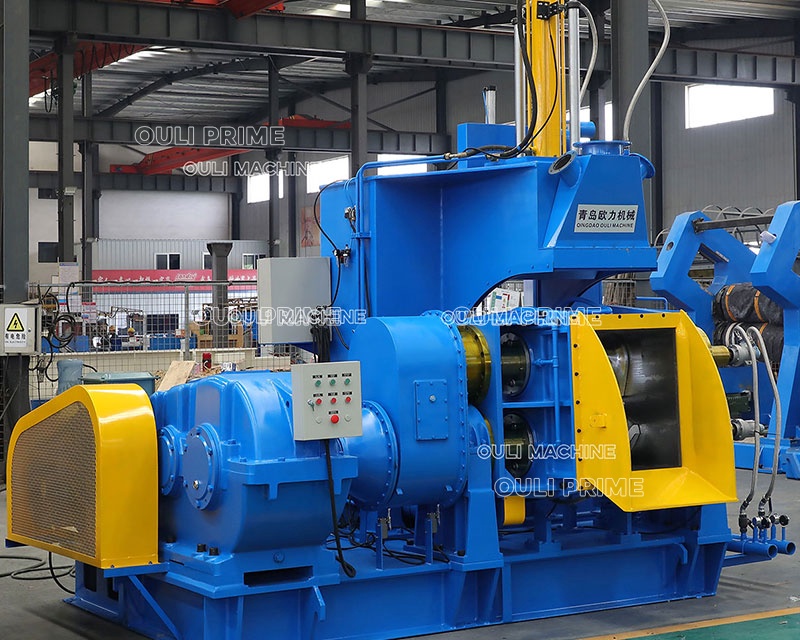
Rubber Internal Mixer: What Procurement Engineers Should Know Before Making a Purchase
When you sit down to evaluate a rubber internal mixer for your facility, the specification sheets from different suppliers can look remarkably similar on the surface. Motor power ratings, rotor speeds, chamber volumes — these numbers all fit into neat tables. But after spending considerable time on the floor of tire plants, rubber product manufacturing facilities, and compounders across different regions, You have learned that the real differences show up long after the purchase order is signed.
This article walks through what actually matters when you are assessing a rubber internal mixer, from the perspective of someone who has watched these machines run day in and day out.
What a Rubber Internal Mixer Does — And Why It Matters
A rubber internal mixer, sometimes still referred to by the older term Banbury mixer, is a batch-type machine designed for plastication and mixing of rubber and plastics. Its core function is straightforward: take raw polymers, fillers (carbon black, silica, calcium carbonate), processing oils, and various chemical additives, and blend everything into a uniform compound.
The reason this step matters so much to procurement is that mixing quality directly determines downstream performance. Poor dispersion shows up later as inconsistent vulcanization, weak spots in finished products, and higher scrap rates. In short, the internal mixer sets the baseline for everything that follows in your production line.
How the Machine Actually Works
Inside the mixing chamber sit two rotors that turn in opposite directions at different speeds. The speed ratio between them typically sits around 1:1.2. As the rotors rotate, they generate shear forces that break down filler agglomerates and distribute them throughout the polymer matrix. A pressurized ram applies downward force on the charge to keep material contained and help compact it for more efficient mixing.
The closed-chamber design serves two purposes. First, it contains dust and fumes, which matters for both worker environment and material loss. Second, it allows the operator to control the mixing temperature more precisely through the chamber’s cooling system.
Mixing Chamber Construction — A Detail That Shows Up in Maintenance Logs
The mixing chamber is where the actual work happens, and its construction quality has a direct bearing on both compound consistency and your long-term maintenance costs.
Look at the cooling approach. Drilling-type cooling channels machined into the chamber walls provide more uniform temperature distribution compared to simpler jacket-cooling methods. Temperature control during the mixing cycle is important because the friction-generated heat influences viscosity, dispersion quality, and ultimately the cure characteristics of the final compound.
The surface treatment deserves attention too. Hard alloy surfacing applied to the chamber working surface, typically in the 4–5 mm range with hardness ratings of 45 HRC or above, followed by hard chromium plating in the 0.10–0.15 mm range, gives the surface the wear resistance needed when processing abrasive filler loads like carbon black.
Rotor Design — Where the Real Action Happens
The rotors are the working end of the machine. Modern rubber internal mixers typically use two-edge high-efficiency rotors with hollow cast bodies. The hollow interior allows water cooling to pass through, managing heat buildup during extended mixing cycles — particularly useful when running high-viscosity compounds or performing long dispersion cycles.
The rotor working surfaces receive the same hard alloy surfacing and chromium plating treatment as the chamber. This is not simply about extending component life. As these surfaces wear over time, the clearance between rotor and chamber wall changes, which can subtly affect shear intensity and dispersion quality. Maintaining proper clearances is part of why understanding your wear component specifications matters during the procurement phase.
Discharge and Locking Mechanism
The discharge and locking device might appear to be a minor component, but in practice it is one of the areas that generates the most maintenance activity over the equipment’s life. A typical arrangement uses a discharge door operated by a double rack swing cylinder, along with a discharge door seat.
The mechanism needs to handle repeated opening and closing under load while maintaining an adequate seal to prevent material leakage. When evaluating machines, consider how accessible these components are for inspection and replacement. Equipment designed with serviceability in mind tends to cost less in downtime over its operational lifespan.
Control System — PLC Integration Is Standard Now
Current-generation rubber internal mixers come equipped with PLC control systems, with Siemens being a commonly specified brand. The control system manages rotor speed sequencing, temperature monitoring, cycle timing, and various safety interlocks.
From a procurement standpoint, a properly implemented PLC system offers practical benefits: more consistent batches through repeatable program parameters, easier troubleshooting through diagnostic displays, and the ability to store and reproduce mixing recipes for different compound formulations. These may seem like software details, but they translate directly into reduced setup time and fewer off-spec batches during production changeovers.
Technical Parameters Across the Model Range
Different production volumes require different machine sizes. Below is the specification range commonly available:
Note that the working volume represents the actual usable capacity — this is the figure you should use when calculating throughput. The total volume includes the free space above the compound level, which is necessary for proper material movement during the mixing cycle.
Where These Mixers Get Used
Rubber internal mixers serve a wide range of applications across the rubber and plastics industry. Tire manufacturers use them for compound preparation across various tread, sidewall, and inner liner formulations. Rubber product manufacturers rely on them for vibration isolators, sealing materials, hoses, belts, sponges, elastic cords, and automotive rubber parts. The equipment also handles TPR, EVA, masterbatches, pigment inks, and various chemical compound formulations.
Questions to Ask Before You Sign
When you are in discussions with equipment suppliers, the following questions tend to reveal more about the actual build quality and long-term support than standard specification sheets:
• What is the expected service life of the chamber and rotor surfacing under typical operating conditions in our application?
• How is the PLC system programmed — can our technicians modify recipes in-house, or do we need vendor support for changes?
• What is the lead time for major wear parts such as rotor tips and chamber lining?
• Does the supplier provide on-site commissioning and installation support?
• What warranty terms apply to the main drive system versus consumable wear components?
• Can the supplier provide references from installations with similar production requirements?
Wrapping Up
Selecting a rubber internal mixer represents a meaningful capital expenditure. The specification numbers on paper provide a starting point, but the actual value of the equipment shows up in daily operation — batch-to-batch consistency, maintenance intervals, ease of recipe changes, and the supplier’s willingness to support the installation through its operational life.
Take the time to understand how the machine will perform in your specific application, not just what the brochure says. The details around chamber construction, rotor design, discharge mechanism accessibility, and control system flexibility are the factors that tend to matter most once the equipment is running on your floor.

leave your message