Mill Rubber: Key Considerations for High-Consistency Mixing & Stock Blending
Published: May 19, 2026 | By: David Chen, Senior Process Engineer, Qingdao OULI Machine
David Chen has over 15 years of experience in rubber mixing mill design and application engineering, specializing in two-roll mill configurations for polymer processing.
---
Mill Rubber: Key Considerations for High-Consistency Mixing & Stock Blending
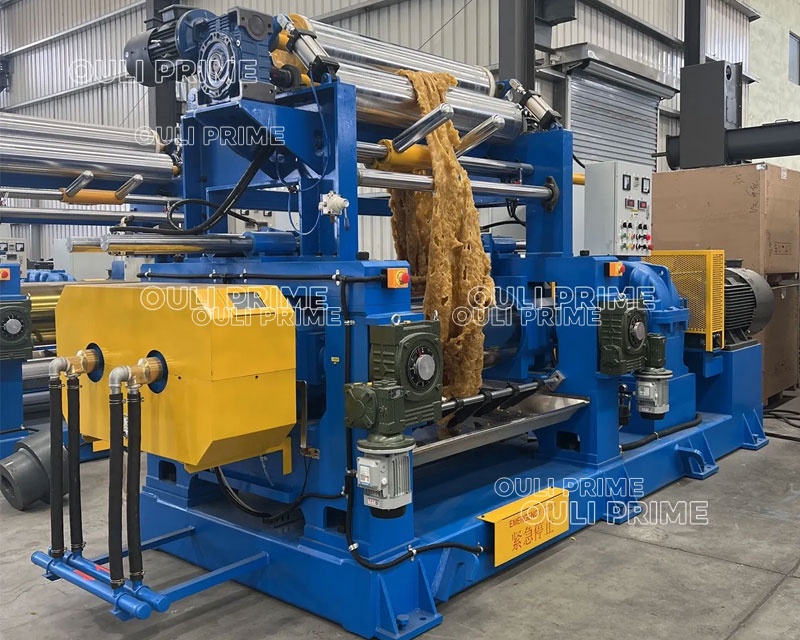
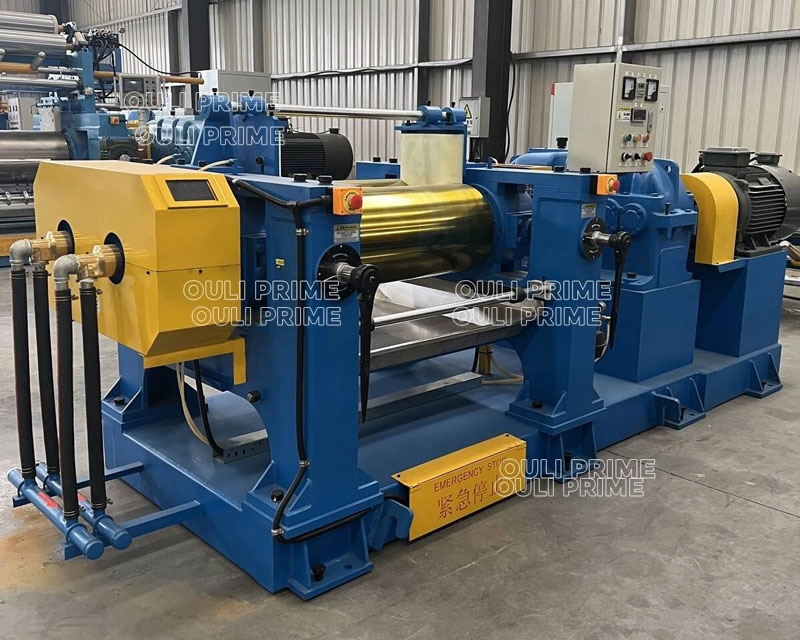
In rubber product manufacturing, the open two-roll mill remains a cornerstone for mill rubber —the process of shearing, kneading, and blending raw polymers with additives. Operators and plant managers frequently search for "mill rubber" to understand equipment capabilities, safety configurations, and mixing efficiency for compounds like NR, SBR, EPDM, or thermoplastics.
As a practical guide, this article explains what to examine when selecting or upgrading a rubber mixing mill, focusing on technical parameters that directly affect batch uniformity and production uptime.
1. Roll Material & Surface Hardness Determines Mixing Consistency
When you mill rubber, the roll’s grip and wear resistance control dispersion. High-quality mills use LTG-H chromium-molybdenum chilled cast iron rolls with a chilled layer hardness of 72–75 HSD and depth of 15–20 mm. This ensures:
- Stable friction ratio without surface cracking
- Minimal roll deflection under load
- Optional chrome plating or mirror finishing for release-critical compounds
2. Bearing Type Affects Energy Use and Maintenance
To mill rubber efficiently, the bearing system must handle high radial loads. Automatic aligning roller bearings (e.g., ZWZ, SKF, or FAG) reduce energy loss by over 5% compared to traditional nylon bushings. Automated grease lubrication with adjustable frequency keeps maintenance predictable.
3. Stock Blender Integration Improves Batch Homogeneity
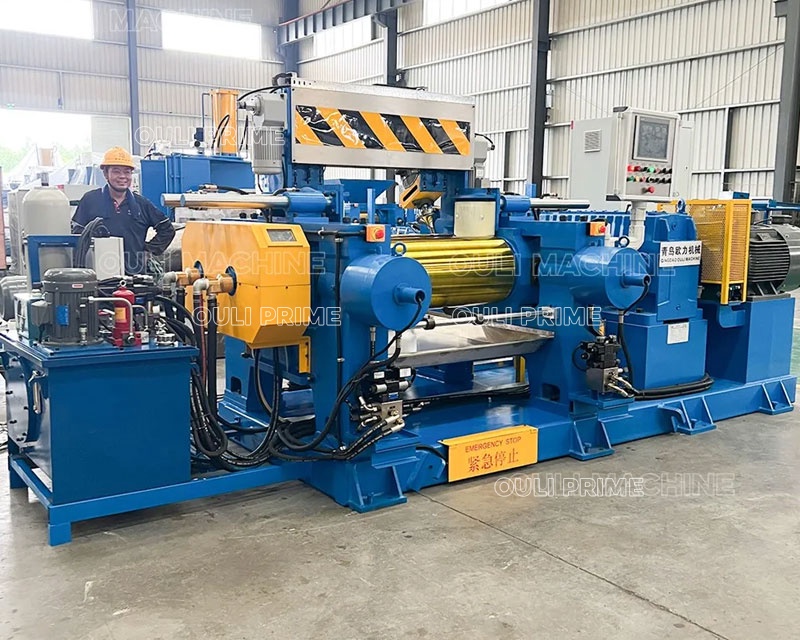
A hydraulic stock blender with chrome-plated rollers and frequency-controlled speeds allows operators to mill rubber with automated turnover. This cuts mixing cycles and reduces manual labor while achieving uniform temperature distribution—critical for heat-sensitive formulations.
4. Nip Adjustment & Safety Systems
Regulations require that every mill rubber line includes:
- Emergency stops: minimum four push-buttons plus a kick bar or chest bump bar
- Braking: electric-hydraulic system stopping within 1/4 roll turn
- Nip adjustment: manual (standard), motorized, or hydraulic with single/two-side control
These features not only protect operators but also minimize downtime during compound changes.
5. Gearbox Durability
A hard tooth surface reducer (four-axis, three-stage transmission) with a safety factor above 2.0 prevents shock load failures when you mill rubber with stiff or recycled materials. Top Chinese brands offer reliable performance with 12‑month whole‑machine warranty.
Application Example
Qingdao OULI Machine supplies automatic stock blender type two-roll open mixing mills for feeding calendars, hot presses, or extruders. Typical uses include:
- Masterbatch mixing
- Re-milling for carbon black dispersion
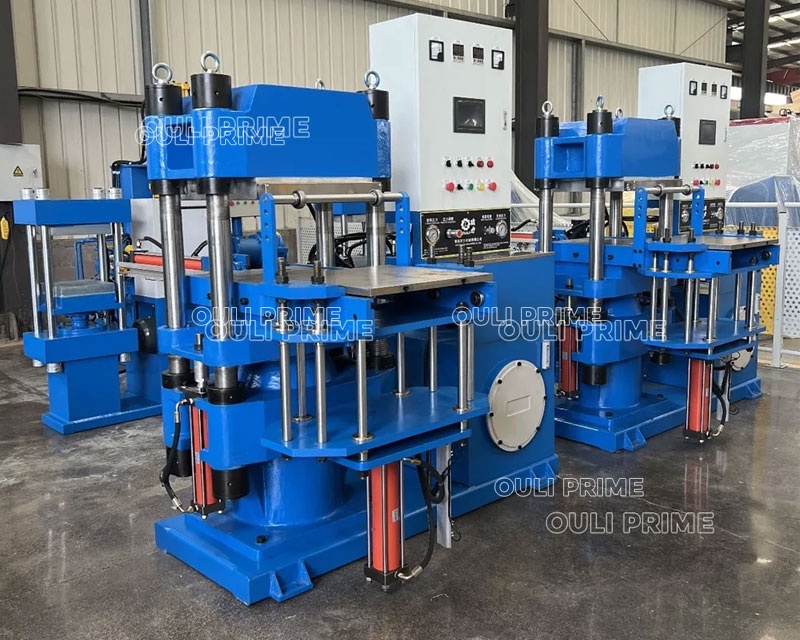
- Warming and sheeting for compression molding
---
FAQ: Mill Rubber
Q1: What does "mill rubber" mean in a factory setting?
A: "Mill rubber" refers to processing raw or compounded rubber through a two-roll mixing mill. The rolls shear and blend the polymer with fillers, oils, and curatives to achieve a uniform stock for molding or extrusion.
Q2: Which materials can be processed on a rubber mixing mill?
A: You can mill natural rubber (NR), styrene-butadiene rubber (SBR), butyl rubber (IIR), EPDM, nitrile rubber (NBR), as well as thermoplastics like EVA or PVC when using the appropriate roll temperature control.
Q3: How do I know if my mill rubber process needs a stock blender?
A: If your batch requires consistent temperature control and faster dispersion of carbon black or silica, a hydraulic stock blender reduces manual cutting and flipping. It is recommended for medium-to-large production runs.
Q4: What safety features are essential when operating a mill to rubber compounds?
A: Mandatory features include: emergency stop bars within operator reach, a braking system that stops rolls within ¼ turn, and anti-kickback devices such as chest bumpers or pull‑rods. Safety light curtains are an optional upgrade.
Q5: How often should roll bearings be lubricated on a rubber mixing mill?
A: With an automatic lubrication system, you can set intervals (e.g., every 8 operating hours) for grease delivery. This extends bearing life and prevents unplanned downtime.
Q6: Can Qingdao OULI Machine customize a mill for my floor space?
A: Yes. OULI provides pre-sales support for plant layout, electrical integration, and water cooling systems. Delivery for standard mills ranges 10–30 days, and spare parts kits are included.
---
For specifications on the Automatic Stock Blender Type Two-Roll Rubber Open Mixing Mill, visit the product page or contact Qingdao OULI Machine for a site-specific recommendation.

leave your message