Open Mill Technology: Why Rubber Mixing Mills Remain the Backbone of Modern Polymer Processing
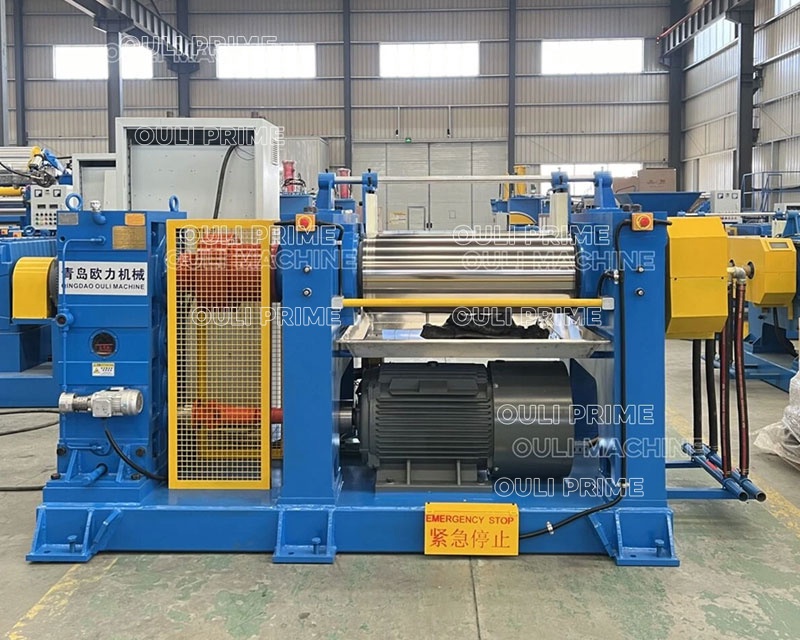
QINGDAO OULI MACHINE Continues to Drive Innovation in Two-Roll Mill Design for Laboratory and Production Applications
As the global rubber and plastics industry continues to evolve, one piece of equipment has remained remarkably persistent in its fundamental design while undergoing significant technological refinement: the open mill. Also known as a two-roll mixing mill, this essential machine continues to serve as the cornerstone of polymer processing facilities worldwide, from small-scale laboratory operations to high-volume production lines.
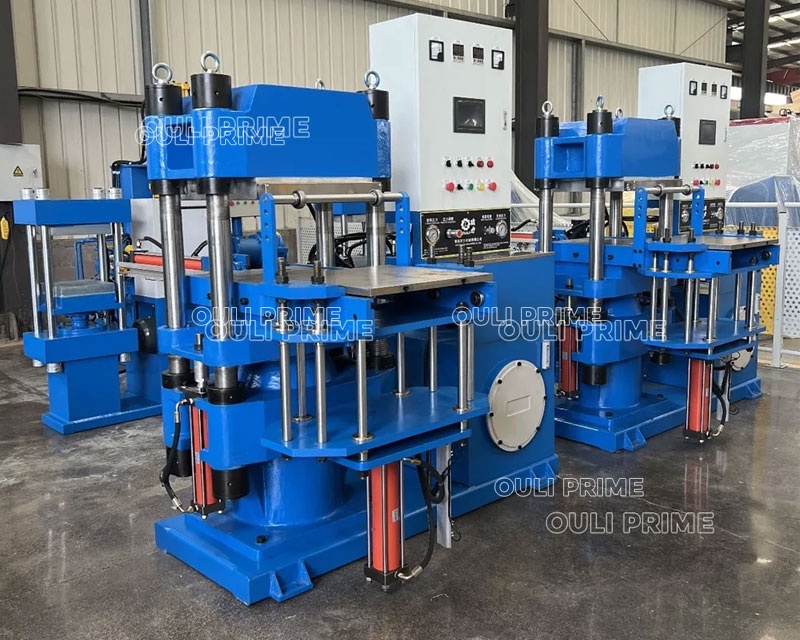
The open mill's enduring relevance stems from its remarkable versatility. Whether processing natural rubber, synthetic compounds, thermoplastics, or EVA materials, the two-roll mill provides manufacturers with the precise control needed for effective mixing, kneading, and final material preparation. These processed materials subsequently feed into calendars, hot presses, and other downstream equipment, making the open mill an indispensable first step in countless manufacturing processes.
Modern Engineering Meets Traditional Reliability
Today's open mills bear little resemblance to their predecessors. Modern engineering has transformed these workhorses of the rubber industry into precision instruments capable of meeting the most demanding quality standards. The heart of any quality open mill lies in its rollers, where advanced metallurgy has made significant strides.
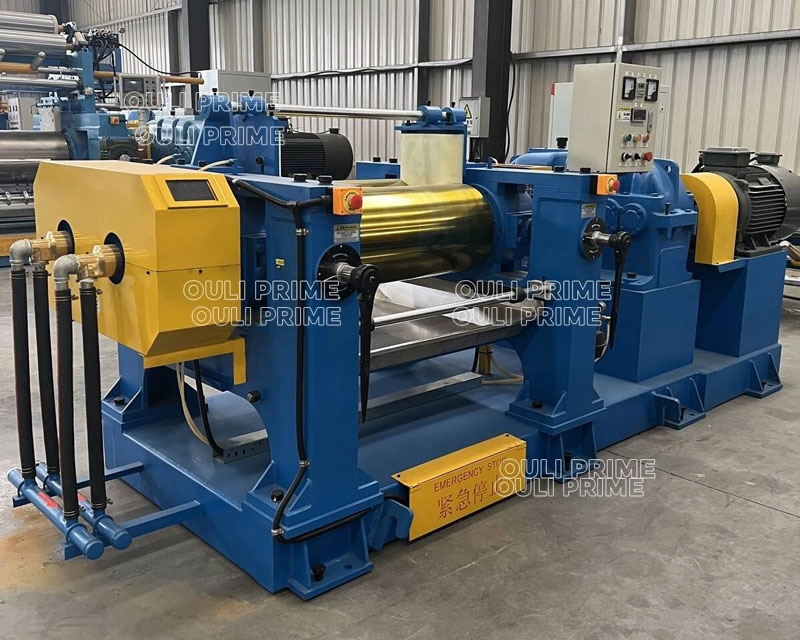
Contemporary mills feature rollers constructed from LTG-H chrome-molybdenum alloy cold cast iron, utilizing centrifugal casting techniques that create a surface hardness of 72-75 HSD on the chilled layer. This hardness ensures exceptional wear resistance and longevity, critical factors for operations running multiple shifts. For applications requiring specialized surface characteristics, manufacturers now offer optional chrome-plated rollers, mirror-finished surfaces, and drilled rollers for enhanced temperature control.
The bearing systems in modern open mills have also undergone substantial improvement. Automatic aligning roller bearings now provide superior load capacity while delivering energy savings exceeding 5% compared to traditional nylon bush designs. This efficiency gain, while seemingly modest, translates into significant operational cost reductions over the equipment's lifetime.
Safety and Precision: The New Standards
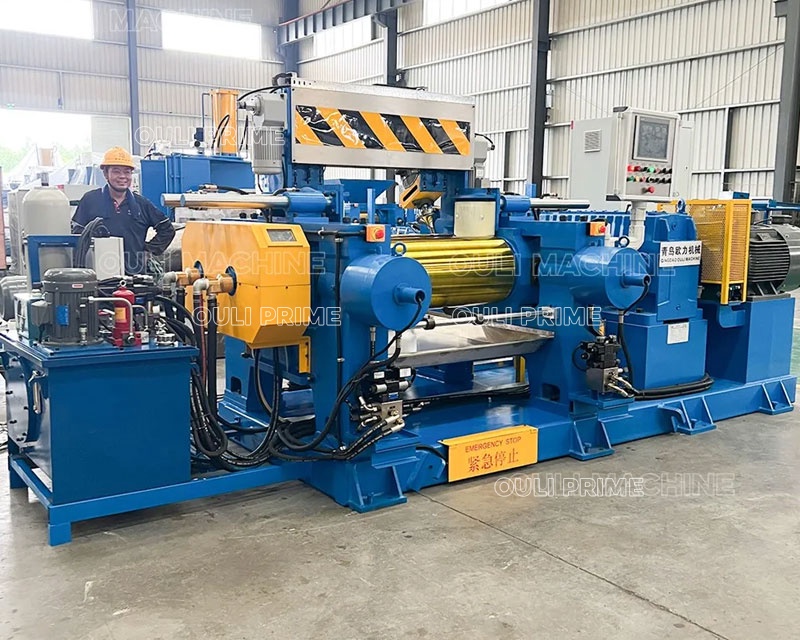
Perhaps the most significant advancements in open mill technology have come in the areas of safety and operational precision. Modern mills incorporate multiple safety systems, including strategically positioned emergency stop buttons, kick-stop devices, and optional features such as chest bump stops, pull-rod mechanisms, and safety light curtains. These systems ensure that the equipment can be stopped within a quarter revolution—a critical safety parameter that protects operators while maintaining productivity.
Precision control has similarly advanced. While manual nip adjustment remains standard on many models, manufacturers now offer automatic motorized adjustment and hydraulic systems capable of both single-side and two-side adjustments. This precision translates directly to product quality and consistency.
The incorporation of frequency-controlled variable speed drives on stock blenders and rollers has given operators unprecedented control over the mixing process. When combined with advanced hydraulic systems and chrome-plated blending components, these features enable manufacturers to achieve previously unattainable levels of material uniformity.
The OULI Advantage: Engineering Excellence
QINGDAO OULI MACHINE has positioned itself at the forefront of this technological evolution. Based in Qingdao's Huangdao District, the company has developed a reputation for manufacturing open mills that combine robust construction with sophisticated engineering features.
The company's approach to quality begins with the frame and base construction, utilizing 240mm steel plate that undergoes precision welding, annealing, and machining processes. This foundation supports hard-gear reducers from top Chinese manufacturers, featuring four-axis three-stage transmission with safety factors exceeding 2.0—ensuring reliable operation under the most demanding conditions.
Automatic lubrication systems represent another area where OULI has invested in engineering excellence. Programmable dry oil (lithium grease) lubrication systems allow operators to set precise lubrication intervals and frequencies, extending bearing life and reducing maintenance requirements. For customers requiring the highest levels of reliability, options include premium bearing brands such as FAG and SKF.
Global Support and Quality Assurance
Understanding that equipment reliability depends on proper support, Qingdao OULI MACHINE has developed comprehensive quality assurance and service programs. Every machine undergoes rigorous testing, including a minimum 72-hour automatic run-in period and careful inspection before shipment. The company's SOP (Standard Operation Procedure) ensures consistent quality across all production steps.
For international customers, the company provides extensive pre-sales support, including technical consultation on machine layout, electrical requirements, and process optimization. Post-sale, experienced technical engineers are available for on-site installation support and operator training—a service that has proven invaluable for facilities in emerging manufacturing regions.
With standard delivery times of 10-30 days and comprehensive 12-month warranties, QINGDAO OULI MACHINE has established itself as a reliable partner for rubber processors worldwide. The company's integrated solutions capability allows customers to source complete processing lines through a single supplier, streamlining procurement and ensuring system compatibility.
Future-Ready Processing
As the rubber industry continues to face challenges including raw material cost volatility, environmental regulations, and increasing quality demands, the open mill's role appears secure. Its ability to handle diverse materials, adapt to varying process requirements, and deliver consistent results makes it an essential tool for manufacturers navigating an uncertain future.
The key to maintaining this relevance lies in continuous improvement—exactly the approach taken by manufacturers like Qingdao OULI MACHINE. By combining robust traditional engineering with modern control systems, safety features, and materials technology, today's open mills are well-equipped to meet the challenges of next-generation polymer processing.
For rubber processors evaluating their mixing equipment options, the modern open mill offers an attractive combination of proven technology and advanced capabilities. Whether for laboratory development, pilot production, or full-scale manufacturing, these versatile machines continue to demonstrate why they remain the backbone of the rubber and plastics processing industry.
---
FAQ: Open Mill Technology and Applications
Q1: What is the primary function of an open mill in rubber processing?
The open mill, or two-roll mixing mill, serves as a fundamental processing machine for mixing and kneading raw rubber, synthetic rubber, thermoplastics, or EVA materials with chemical additives. It transforms these raw materials into a homogeneous compound suitable for feeding into calendars, hot presses, or other downstream processing equipment for manufacturing rubber and plastic products.
Q2: What should buyers consider when selecting an open mill for laboratory versus production use?
Laboratory applications typically require smaller mills (commonly 6×13 inches) with precise speed control, accurate temperature regulation, and the flexibility to process small batches with minimal material waste. Production mills are larger, built with heavier-duty components, designed for continuous operation and higher throughput. Key considerations for both include roller hardness, bearing quality, safety features, and the availability of optional configurations like drilled rolls or automatic nip adjustment.
Q3: How does roller hardness impact open mill performance and the quality of mixed compounds?
Roller hardness, measured in HSD (Shore D scale), directly affects wear resistance and the quality of shearing action during mixing. Higher hardness (72-75 HSD) provides superior wear resistance, maintaining consistent roll geometry over longer periods and ensuring consistent mixing action. This translates to better compound uniformity, reduced contamination from wear particles, and extended roller service life—all critical factors for maintaining product quality and reducing operational costs.
Q4: What safety features are essential on a modern open mill?
Modern open mills should incorporate multiple layers of safety protection. The minimum requirements include:
- Emergency stop buttons positioned at each end of the machine and on the control panel
- Braking systems capable of stopping rolls within a quarter revolution (electric-hydraulic braking is preferred)
- Optional safety features such as chest bump stops, pull-rod emergency stops, or safety light curtains
- Kick-stop bars that activate with foot pressure
All safety systems should be fail-safe and regularly tested to ensure they meet international safety standards.
Q5: How does bearing selection affect open mill efficiency and maintenance requirements?
The bearing system significantly impacts operating efficiency and maintenance costs. Modern automatic aligning roller bearings offer superior load handling and can reduce energy consumption by over 5% compared to traditional nylon bush designs. They also require less frequent adjustment and provide more consistent roll alignment, resulting in better product quality. Premium bearing options (such as FAG or SKF) combined with automatic lubrication systems can extend service intervals and reduce the total cost of ownership.
Q6: What kind of after-sales support should be expected from a reputable open mill manufacturer?
A reputable manufacturer should provide:
- Comprehensive pre-sales consultation on machine selection, layout, and utilities
- Detailed installation documentation and on-site commissioning support
- Training for operators and maintenance personnel at the customer's facility
- A reliable supply of spare parts with clear documentation
- Technical support for troubleshooting and process optimization
- Clear warranty terms (typically 12 months for the complete machine) with transparent coverage details
Q7: What are the typical delivery lead times for an open mill, and what factors affect them?
For standard specification mills, delivery is typically 10-30 days from order confirmation. Factors that can extend lead times include:
- Special optional features (chrome-plated rollers, hydraulic nip adjustment, etc.)
- Custom specifications for specific voltage or control requirements
- Premium component selections (SKF/FAG bearings, specialized gearboxes)
- Project management requirements for integrated system solutions
Buyers should discuss lead times during the quotation phase to align with their project schedules.
Q8: Can an open mill be integrated into an automated production system?
Yes. Modern open mills can be equipped with frequency-controlled drives for variable-speed operation, programmable logic controllers (PLC) for process automation, and interfaces for integration with plant-wide control systems. This allows the mill to be part of a coordinated production line with automated material feeding, blending, and downstream processing equipment, reducing labor requirements and improving consistency.

leave your message